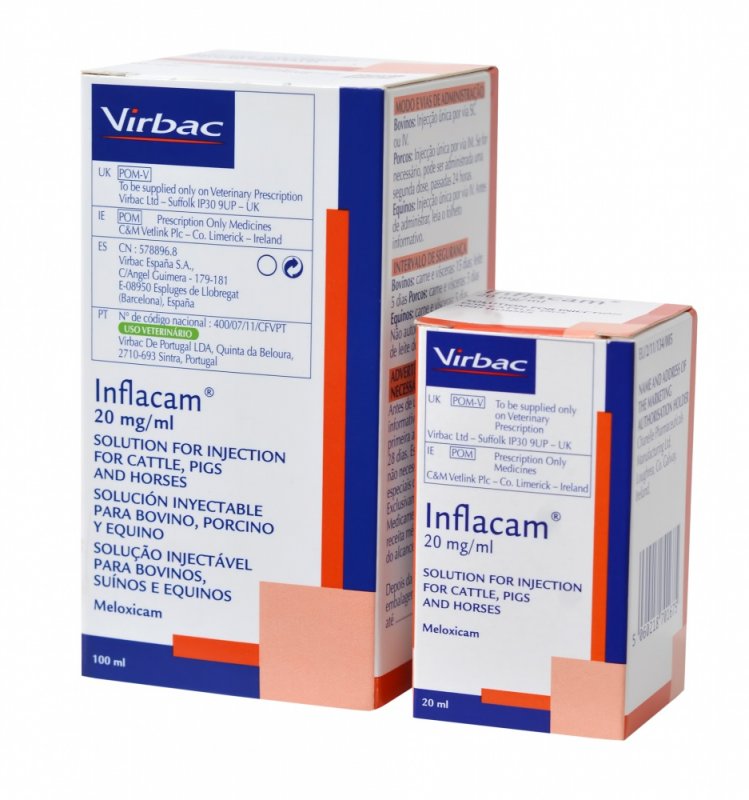
Inflacam 20mg/ml Injection 100ml is a veterinary Non-Steroidal Anti-Inflammatory Drug (NSAID). Its active ingredient is Meloxicam, a well-established and highly effective compound known for its strong analgesic (pain-relieving), anti-inflammatory, and antipyretic (fever-reducing) properties.
The “20mg/ml” concentration indicates a high-potency formulation. This allows for smaller injection volumes, which is a significant advantage in large animal practices as it minimizes tissue irritation and stress during administration. The “100ml” presentation signifies a multi-dose vial, making it an economical and practical choice for treating multiple large animals or for managing conditions requiring several doses over a course of therapy.
How it Works: The Mechanism of Action (COX-2 Preferential Inhibition)
Meloxicam, the active component of Inflacam, belongs to the oxicam class of NSAIDs. It exerts its therapeutic effects by inhibiting the synthesis of prostaglandins, which are key chemical mediators involved in triggering and perpetuating inflammation, pain, and fever in the body.
What makes Meloxicam particularly valuable and often preferred is its preferential inhibition of the Cyclooxygenase-2 (COX-2) enzyme.
- COX-2 is primarily induced during inflammation and is responsible for the production of prostaglandins that mediate inflammatory responses, pain, and fever.
- COX-1 is constitutively expressed (always present) and plays crucial “housekeeping” roles, such as maintaining the protective gastric mucosal barrier and regulating renal blood flow.
By preferentially targeting COX-2, Inflacam 20mg/ml Injection effectively reduces inflammation, pain, and fever, while generally being gentler on the gastrointestinal tract and kidneys compared to older, non-selective NSAIDs (which inhibit both COX-1 and COX-2 more equally). This results in a better safety profile, especially for longer treatment durations or in sensitive animals.
Key Clinical Indications
- Cattle:
- Bovine Respiratory Disease (BRD): Used as an adjunctive therapy with antibiotics to reduce fever, lung inflammation, and pain, significantly improving the animal’s comfort and encouraging feed intake.
- Acute Mastitis: Effectively alleviates systemic pain, reduces udder inflammation, and lowers fever when used alongside appropriate antibiotic treatment, helping to restore milk quality and production.
- Calf Diarrhea (Scours): In combination with oral rehydration therapy, it helps to reduce gut inflammation, alleviate pain, and improve the calf’s overall demeanor and willingness to drink.
- Lameness/Musculoskeletal Pain: For conditions like arthritis, laminitis, and other inflammatory musculoskeletal disorders.
- Swine:
- Non-Infectious Locomotor Disorders: Effective in reducing pain and inflammation associated with lameness.
- Mastitis-Metritis-Agalactia (MMA) Syndrome: In sows, it helps alleviate pain and inflammation, supporting the sow’s recovery and fostering nursing behavior.
- Horses:
- Musculoskeletal Disorders: For the management of acute and chronic lameness, osteoarthritis, tendinitis, and soft tissue injuries.
- Equine Colic: Provides effective analgesia for pain associated with colic, aiding in patient stabilization (though flunixin meglumine is often the first choice for acute severe colic, meloxicam is a valuable alternative, especially in cases where GI sensitivity is a concern).
- Post-Operative Pain: To manage pain and inflammation following surgical procedures.
Administration and Dosage
Inflacam 20mg/ml Injection is intended for parenteral administration, typically via intravenous (IV), intramuscular (IM), or subcutaneous (SC) routes, depending on the species and the specific product’s label instructions.
Precise dosing, calculated based on the animal’s exact body weight, the severity of the condition, and the species-specific guidelines, is paramount. The high concentration of 20mg/ml means that a smaller volume is needed per dose, which is a practical advantage. It is often prescribed as a single dose or a short course of therapy, offering sustained relief for 24-72 hours per dose.
Advantages of the 20mg/ml, 100ml Format
- Convenience & Efficiency: The multi-dose 100ml vial is practical for large animal veterinarians, reducing the need for frequent vial changes.
- Reduced Injection Volume: The 20mg/ml concentration allows for smaller injection volumes, minimizing animal discomfort and potential tissue reactions.
- Cost-Effectiveness: Bulk packaging offers an economical solution for high-volume users.
- Targeted Action: Meloxicam’s COX-2 preferential inhibition offers a better safety profile, especially regarding gastrointestinal and renal health, compared to non-selective NSAIDs.
Safety, Precautions, and Withdrawal Times
While Meloxicam is known for its relatively favorable safety profile, it is still an NSAID and must be used responsibly under strict veterinary supervision:
- Contraindications:
- Should not be used in animals with known hypersensitivity to NSAIDs.
- Contraindicated in animals with severe hepatic, cardiac, or renal dysfunction, hemorrhagic disorders, or active gastrointestinal ulceration.
- Not recommended in pregnant or lactating animals unless specifically indicated by a veterinarian after careful risk-benefit assessment (NSAIDs can impact fetal development and may transfer to milk).
- Generally not recommended for very young animals (e.g., calves under 1 week or foals under 6 weeks).
- Dehydration: NSAIDs can exacerbate kidney issues in dehydrated animals; always ensure adequate hydration before administration.
- Concomitant Use: Avoid concurrent use with other NSAIDs or corticosteroids due to an increased risk of adverse effects.