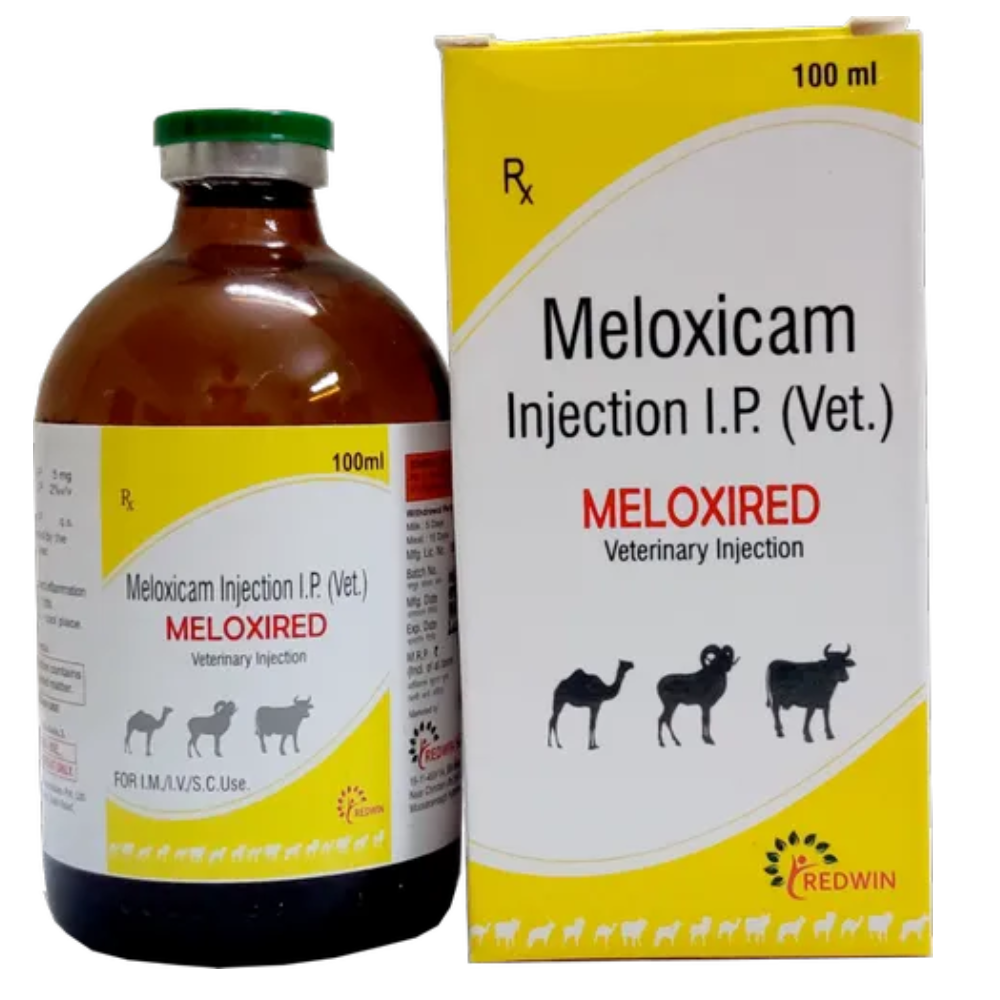
Meloxired Plus Vet Injection – 100ml is a specialized veterinary pharmaceutical that combines the potent anti-inflammatory, analgesic, and antipyretic properties of an NSAID with additional supportive components. The “Meloxi-” part of its name strongly indicates that Meloxicam is the primary active NSAID. The “Plus” suggests the inclusion of other beneficial ingredients, often B vitamins, which play a crucial role in metabolic support and nerve function, aiding in overall recovery.
The “100ml” presentation signifies a multi-dose vial, making it an economical and practical choice for treating multiple large animals or for managing conditions requiring several doses over a course of treatment, particularly in busy farm or equine settings.
The Science Behind the “Plus” Formula: Mechanism of Action
1. Meloxicam (The NSAID Component): Meloxicam belongs to the oxicam class of Non-Steroidal Anti-Inflammatory Drugs. It primarily acts by inhibiting the synthesis of prostaglandins, which are key mediators of pain, inflammation, and fever. What makes Meloxicam particularly advantageous is its preferential inhibition of the Cyclooxygenase-2 (COX-2) enzyme. COX-2 is largely responsible for inflammation, while COX-1 is vital for maintaining the protective lining of the gastrointestinal tract and supporting kidney function. By preferentially targeting COX-2, Meloxicam provides powerful anti-inflammatory and pain-relieving effects while generally having a better safety profile for the GI tract and kidneys compared to non-selective NSAIDs.
2. The “Plus” Component (Often B Vitamins): Many “Plus” formulations in veterinary medicine incorporate a complex of B vitamins (e.g., B1, B6, B12). These vitamins are essential cofactors in numerous metabolic processes, including energy production, nerve function, and red blood cell formation. In the context of an inflammatory or painful condition, B vitamins can:
- Support Metabolism: Help the animal cope with the metabolic stress of illness or injury.
- Aid Nerve Function: Contribute to nerve health, which can be beneficial in conditions involving nerve pain or damage.
- Stimulate Appetite: Some B vitamins can help improve appetite, crucial for recovering animals.
- Enhance Overall Recovery: By providing vital nutritional support, they can help the animal bounce back faster.
Key Clinical Indications
- Cattle:
- Bovine Respiratory Disease (BRD): Used as adjunctive therapy with antibiotics to reduce fever, lung inflammation, and pain, improving the animal’s comfort and encouraging feed intake.
- Acute Mastitis: Helps reduce udder inflammation, swelling, and systemic pain, supporting faster recovery alongside antibiotic treatment.
- Lameness/Musculoskeletal Pain: For conditions like arthritis, laminitis, and other inflammatory musculoskeletal disorders.
- Swine:
- Non-Infectious Locomotor Disorders: Effective in reducing pain and inflammation associated with lameness.
- Post-Farrowing Support: Used in cases of Mastitis-Metritis-Agalactia (MMA) syndrome in sows to alleviate pain and inflammation, encouraging the sow to nurse.
- Horses:
- Musculoskeletal Disorders: For the management of acute and chronic lameness, osteoarthritis, tendinitis, and soft tissue injuries.
- Equine Colic: Provides effective analgesia for pain associated with various forms of colic, aiding in patient stabilization.
- Post-Operative Pain: To manage pain and inflammation following surgical procedures.
Administration and Best Practices
Meloxired Plus Vet Injection – 100ml is typically administered via intramuscular (IM), subcutaneous (SC), or intravenous (IV) routes, depending on the specific species and the product’s label instructions. Precise dosing based on the animal’s body weight is critical. The 100ml volume offers convenience, especially when treating multiple animals or when a single treatment course might require several doses.
Safety, Precautions, and Withdrawal Times
While Meloxicam is known for its relatively favorable safety profile, especially concerning the GI tract, any NSAID-containing product requires careful use:
- Contraindications: Should not be used in animals with known hypersensitivity to NSAIDs, severe hepatic, cardiac, or renal dysfunction, hemorrhagic disorders, or gastrointestinal ulceration.
- Dehydration: NSAIDs can exacerbate kidney issues in dehydrated animals; ensure adequate hydration before administration.
- Pregnancy and Lactation: Use in pregnant or lactating animals should be approached with caution and only under strict veterinary advice, as NSAIDs can impact fetal development or milk production.
- Concomitant Use: Avoid concurrent use with other NSAIDs or corticosteroids due to an increased risk of adverse effects.
- Withdrawal Periods: For food-producing animals (cattle, swine), strict adherence to established withdrawal times for meat and milk is legally and ethically imperative to prevent drug residues in the human food chain. Always consult the specific product label provided by the manufacturer.