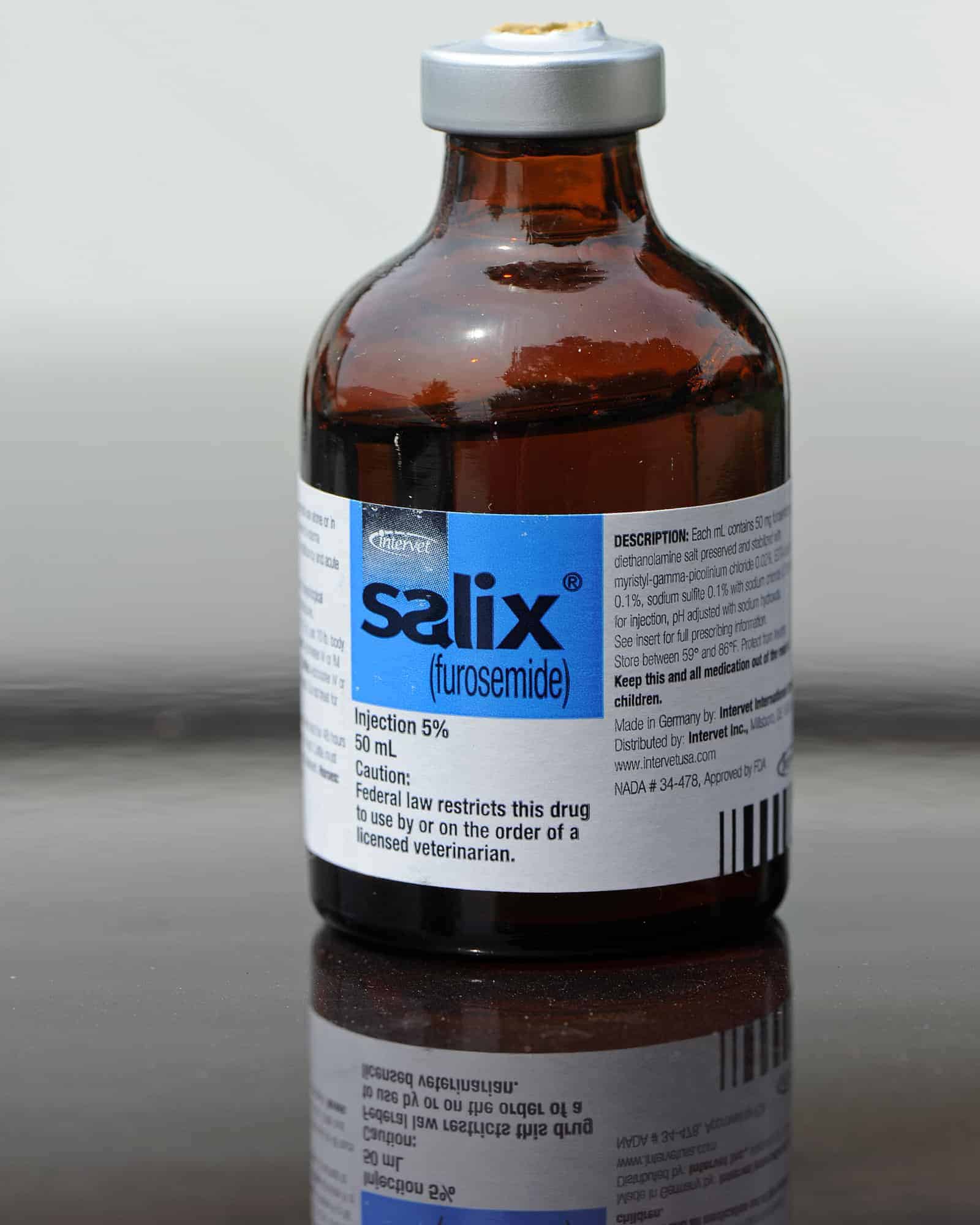
Furosemide (SALIX Injection) is a veterinary prescription loop diuretic injection widely used in equine medicine. In horses, furosemide is best known for its role in managing exercise‑induced pulmonary hemorrhage (EIPH)—often referred to as “bleeding” in racehorses—as well as for treating certain cases of fluid retention (edema) when a rapid diuretic response is required under veterinary supervision. Furosemide works by increasing urine production, helping the horse eliminate excess water and salts. Because of its potent and fast‑acting diuretic effect, the injectable form is typically administered by a veterinarian or trained personnel according to local regulations and event rules.
How equine furosemide works (loop diuretic action)
Furosemide is classified as a loop diuretic, meaning it acts on a specific part of the kidney (the loop of Henle) to reduce reabsorption of sodium and chloride. This causes increased excretion of water and electrolytes (including potassium and chloride), leading to:
- Increased urination (diuresis)
- Reduced circulating blood volume and pressure
- Reduced fluid accumulation in tissues and, in specific contexts, reduced stress on pulmonary capillaries during intense exercise
Key equine indications (uses)
1) EIPH (Exercise‑Induced Pulmonary Hemorrhage)
EIPH is bleeding in the airways that can occur during strenuous exercise, especially in racing and high‑speed performance. It ranges from mild to severe and may reduce performance and recovery. In jurisdictions where allowed, Lasix/furosemide for horses may be used as part of an EIPH management program designed by an equine veterinarian.
Important notes for EIPH:
- Rules vary widely by country, state, racing authority, and discipline
- There may be race‑day medication restrictions, withdrawal times, and testing policies
- Use should always follow regulatory guidance and veterinary direction
2) Edema and fluid overload
Equine furosemide may be prescribed to help manage edema (fluid accumulation) associated with certain medical conditions, such as:
- Dependent edema (ventral swelling) in selected cases
- Fluid overload scenarios where diuresis is clinically appropriate
- Supportive care in some cardiopulmonary or renal‑related fluid imbalance cases (case‑dependent)
Routes of administration (equine injection)
SALIX Injection (furosemide injection equine) is typically administered by:
- Intravenous (IV) injection (common in controlled clinical settings)
- Intramuscular (IM) injection (used in specific circumstances, depending on product labeling and veterinary judgment)
Administration should be performed by a veterinarian or trained handler under veterinary instruction, with attention to sterility, correct handling, and safe restraint.